Pennsylvania has no general vending machine license. An operator whose machines sell soft drinks, sandwiches, hot drinks, or non-food items needs a Sales, Use and Hotel Occupancy Tax License from the Department of Revenue, and one license covers every machine the operator runs (61 Pa. Code §31.28). There is no fee to apply (DCED). Most snack food is exempt: chips, pretzels, crackers, candy, gum, milk, juice beverages, and unflavored water are not taxed when sold from a machine. The state rate is 6%, Allegheny County adds 1%, and Philadelphia adds 2% (Department of Revenue).
Permits at a glance
| Permit | Who issues it | Who needs it | Cost |
|---|---|---|---|
| Sales, Use and Hotel Occupancy Tax License | PA Department of Revenue | Operators selling soft drinks, meals, sandwiches, hot drinks, heated food, or non-food items | No fee |
| Retail food facility license | PA Department of Agriculture | Not vending-only facilities; exempted by a 2011 order | — |
| Commercial Activity License | City of Philadelphia | Anyone doing business in Philadelphia | No fee |
| Amusement device license and privilege tax | City of Pittsburgh | Each claw, prize, game, or music machine in the city | $10, $100, or $1,000 a device a year |
| Mechanical Amusement Tax | City of Philadelphia | Each coin- or token-operated amusement device used for profit | $100 a device a year |
| Tobacco vending license | PA Department of Revenue | Each location with a cigarette or tobacco machine | $25 per location |
| LLC Certificate of Organization | PA Department of State | Optional | $125, then $7 a year |
Sales tax license
Section 31.28 of the sales tax regulations covers vending machines directly. An operator who sells taxable property or “selected food and beverage items” through a machine must hold a Sales, Use and Hotel Occupancy Tax License, and a single license covers any number of machines. The operator’s name and address have to be displayed on each machine by a sign or sticker (61 Pa. Code §31.28).
You register through the Department of Revenue’s myPATH system (Department of Revenue), and the state charges nothing to file (DCED). Once licensed, you file a return for every period, including periods with no taxable sales.
An operator who sells only exempt items, such as chips and candy, makes no taxable sales. The regulation ties the license to selling taxable property or selected food and beverage items.
What is taxable from a machine
From subsection (d) of 61 Pa. Code §31.28:
| Product | Treatment |
|---|---|
| Soft drinks: all non-alcoholic drinks, carbonated or not, except juice beverages | Taxable |
| Hot or cold sandwiches, including cold meat and cheese sandwiches, hoagies, hot dogs, hamburgers | Taxable |
| Meals, salad bar food | Taxable |
| Brewed coffee, hot chocolate, hot tea | Taxable |
| Pizza, soup, and food dispensed heated, or cold food meant for an oven or microwave the operator provides | Taxable |
| Potato chips, corn chips, cheese balls, pretzels, crackers | Exempt |
| Baked goods such as cakes, pies, cookies | Exempt |
| Candy and gum | Exempt |
| Milk products, including chocolate and malted milk | Exempt |
| Iced tea and iced coffee | Exempt |
| Juice beverages, at least 25% natural fruit or vegetable juice | Exempt |
| Unflavored water | Exempt |
| Prepackaged ice cream and frozen water-based products such as ice pops | Exempt |
| Cigarettes, combs, toys, pencils, and other non-food items | Taxable on each item’s price |
Cold food is exempt when no heating facilities are provided, so a cold sandwich is the exception: the regulation names it as taxable. The exempt list names only unflavored water, and the soft drink definition covers all nonalcoholic beverages and names carbonated water. Illinois also taxes soft drinks in full and exempts most snack food from state tax, while Texas taxes half of snack receipts.
Selected food and drink items sold from a machine on the premises of a school or church are exempt. Non-food items from the same machine are still taxable (§31.28(e)).
Equipment is taxable to you when you buy or lease it. The regulation lists vending equipment, accessories such as tables, chairs, microwaves, and dispensers, and supplies such as straws, napkins, and utensils. Cups and containers that wrap the item you sell are exempt.
How the tax is computed
The amount a customer puts in the machine is presumed to include the tax. For selected food and beverage items, the regulation gives the formula: total receipts ÷ 1.06, multiplied by 0.06, is the tax due (§31.28(d)(3)). For non-food items the same presumption applies item by item, and if an audit finds tax was under-reported, the Department treats the amount inserted as the pre-tax price.
The regulation prints only the 6% formula. Allegheny County’s 1% and Philadelphia’s 2% are added to purchases made there (Department of Revenue). The receipts below apply the same back-out at the combined rate.
A law enacted July 12, 2026 makes local sales tax depend on where the item is delivered, retroactive to tax years after December 31, 2025. The Department will not enforce it before October 1, 2026 (Local Sales Tax). The Department’s page does not mention vending machines. The buyer takes a vended item at the machine, which is both the point of sale under the old rule and the point of delivery under the new one.
A month in one machine: $500 of soda, $300 of chips and pretzels, $150 of candy, and $50 of plain bottled water. Only the soda is taxable.
| Soda receipts, tax included | $500.00 |
|---|---|
| $500.00 ÷ 1.08 | $462.96 |
| Tax due: $462.96 × 8% | $37.04 |
| Soda receipts, tax included | $500.00 |
|---|---|
| $500.00 ÷ 1.07 | $467.29 |
| Tax due: $467.29 × 7% | $32.71 |
| Soda receipts, tax included | $500.00 |
|---|---|
| $500.00 ÷ 1.06 | $471.70 |
| Tax due: $471.70 × 6% | $28.30 |
Treating the full $1,000 as taxable in Philadelphia would mean paying $74.07 instead of $37.04. Since only one category carries tax, I’d set up the machine’s product list so soft drinks report as their own line from the first day.
Smart coolers and micro markets
Section 31.28 defines a vending machine as a device that mechanically dispenses property for a purchase price (§31.28(a)). A smart cooler that unlocks a door and charges after it closes does not dispense anything mechanically, and we did not find a Department of Revenue ruling on whether §31.28 or the general food rules apply to one. Before filing the first return on a smart cooler, I’d ask the Department for a written ruling and keep it with the license.
Food rules and the Department of Agriculture
The Department of Agriculture’s 2011 Licensure of Retail Food Facilities Order exempts “a retail food facility in which food or beverages are sold only through a vending machine” from licensing. The exemption covers the license only: the facility “remains subject to inspection and all other provisions of the Act” (41 Pa.B., January 22, 2011). The same order notes that the Retail Food Facility Safety Act itself exempts facilities selling only prepackaged, non-potentially hazardous food.
Pennsylvania’s food rules adopt the current edition of the FDA Model Food Code where it does not conflict with state law (7 Pa. Code §46.4). For a machine holding sandwiches, salads, or other time and temperature controlled food, the Food Code requires an automatic control that stops vending when the machine cannot hold temperature, and keeps it stopped until the machine is serviced and restocked (FDA Food Code 2022, §4-204.111).
Allegheny County runs its own food safety program. Its fee schedule, effective January 1, 2024, lists permanent facility permits from $128 to $404 a year by class and has no vending machine line (Allegheny County Health Department). Whether a fresh-food machine needs one of those permits is not published. Call the Food Safety Program at 412-578-8044 with the product list before placing one in the county. Philadelphia’s list of food business licenses does not include a vending machine license either (City of Philadelphia).
Philadelphia
- Commercial Activity License. Any person or entity doing business in Philadelphia needs one, including businesses based outside the city. It costs nothing and does not need to be renewed. You need a Business Income and Receipts Tax account number to apply, and you must be current on city taxes (City of Philadelphia).
- Business Income and Receipts Tax. For tax year 2025 the rates are 1.410 mills on gross receipts, which is $1.41 per $1,000, and 5.71% of taxable net income. The $100,000 receipts exemption no longer applies from tax year 2025, and the return is due April 15 even with no profit (BIRT).
- Beverage tax. Philadelphia taxes sweetened beverages at 1.5 cents an ounce, which covers regular and diet soda, sports and energy drinks, sweetened water, and pre-sweetened tea and coffee. Registered distributors normally pay it. A dealer who buys from a distributor that is not registered must register and pay the city directly, with returns due the 20th of every month (Philadelphia Beverage Tax). I think buying soda for Philadelphia machines from a registered distributor is simpler than taking on a monthly return.
- Mechanical Amusement Tax. $100 per device a year on any coin- or token-operated device used for amusement and for profit, due by December 31, with no exemptions; the same page says short monthly returns are now filed online. A Certification of Ownership is filed when the device is first put into use, and late payment can put the Commercial Activity License at risk (Mechanical Amusement Tax). The city’s page does not name claw machines.
Pittsburgh
Pittsburgh added Chapter 774, Mechanical Amusement Devices Tax and Licenses, to its code. Council passed it June 24, 2026 and the mayor signed it June 26 (File 2026-0544). A license is required to possess any video or mechanical amusement device in the city, and the definition names claw machines. The ordinance does not assign claw machines to a class by name; Class II is the class for machines that offer prizes. Ohio’s claw machine license comes from its Casino Control Commission, and Georgia’s COAM program runs through the state lottery.
| Class | Examples in the ordinance | Annual privilege tax per device |
|---|---|---|
| Class I | Poker machines, video slot machines, video sweepstakes machines | $1,000 |
| Class II | Machines offering prizes such as stuffed animals, toys, or candy | $100 |
| Class III | Darts, jukeboxes, pool tables, pinball, shuffleboard, children’s video games | $10 |
Other terms from the ordinance:
- Who applies. The application names both the vendor, meaning the machine’s owner, and the proprietor of the business where it sits, and both verify it. Applicants must be at least 21.
- Timing. No license issues until 10 days after the application. The tax runs to December 31; a device installed after July 1 may be prorated on a schedule set by the City Treasurer.
- Arcades. For Class II and III devices in an establishment deemed an amusement arcade, the tax is capped after the first 10 devices.
- Sticker. Each licensed machine carries its own disc or sticker, which does not transfer to another machine.
- Penalties. $50 to $600 per violation, and each day a machine runs in violation is a separate offense.
The ordinance’s own findings say nearly one in five Pennsylvania municipalities license amusement devices, including half of Allegheny County’s 130 municipalities, so check the municipality before placing a claw machine anywhere in the county. PLI’s business licenses page still says it stopped accepting Mechanical Amusement Devices applications effective May 14, 2022 (PLI); its number is 412-255-2621. Because the ordinance makes both owner and host sign the application, I’d agree in writing with the host who files it and who pays the annual tax before the machine goes in.
Tobacco and e-cigarette machines
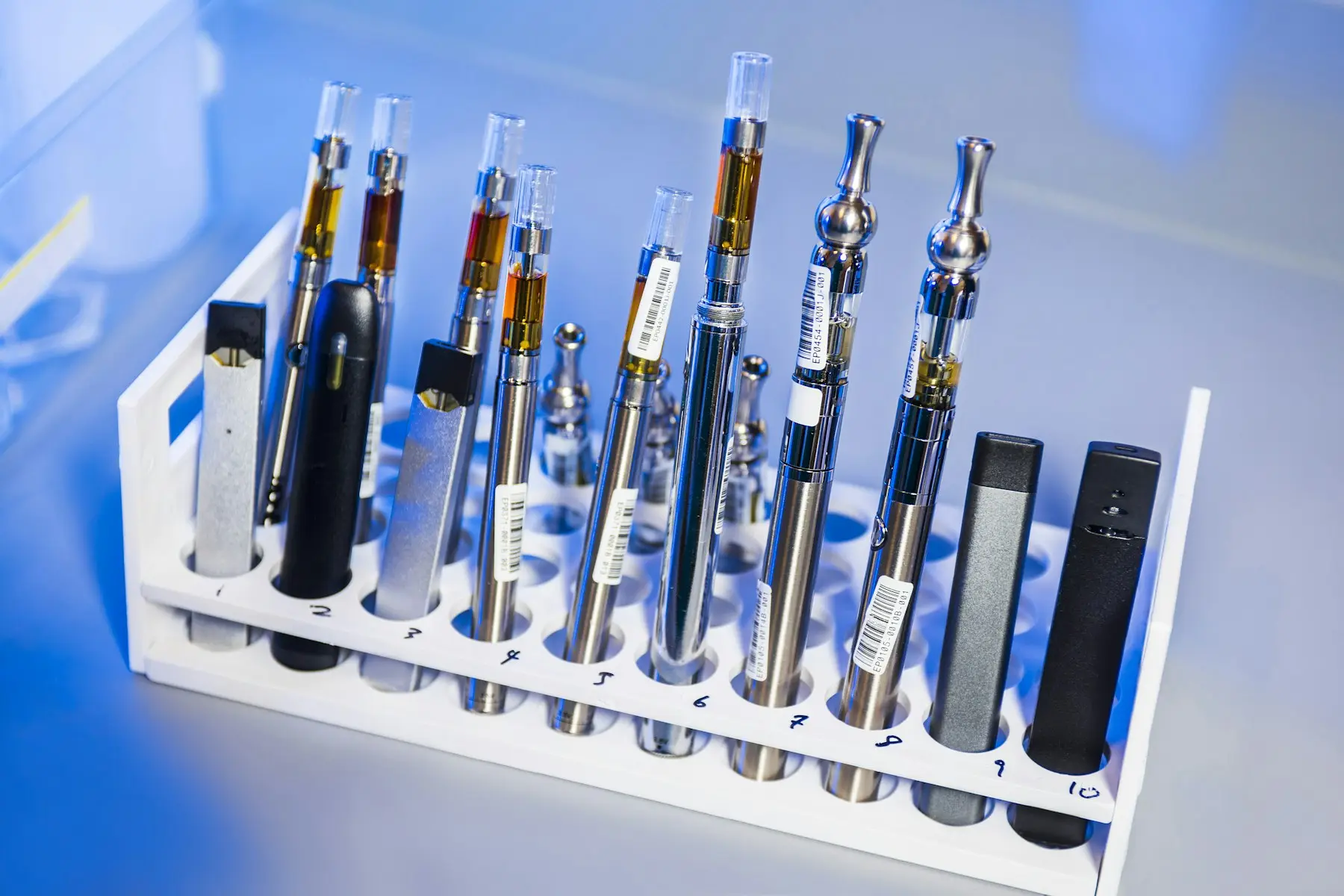
Placing a vending machine containing a tobacco product “in a location accessible to minors” is a summary offense. A minor is anyone under 21, or under 18 for active or reserve service members and honorably discharged veterans, and tobacco product includes e-cigarettes. A retailer’s fines run from $100 to $500 for a first offense up to $3,000 to $5,000 for a fourth (18 Pa.C.S. §6305). The Department of Revenue licenses tobacco vending at $25 per vending location, managed through myPATH (Department of Revenue). Other states are in vape vending machine laws.
Forming an LLC
Optional. Which entity to pick.
- Certificate of Organization. $125 to the Department of State. Registering a fictitious name costs $70 (Department of State).
- Annual report. $7, filed between January 1 and September 30. Beginning with reports due in 2027, an LLC that does not file faces administrative dissolution six months after the due date and loses protection of its name (Department of State).
Insurance is a separate cost from the LLC; published vending insurance premiums are listed by policy.
Federal calorie labeling
An operator with 20 or more machines has to post calorie information for the food it sells under the FDA’s vending rule. In glass-front machines, the operator can rely on calories printed on the front of the package (FDA). For how New York handles the same products, see New York vending machine permits.