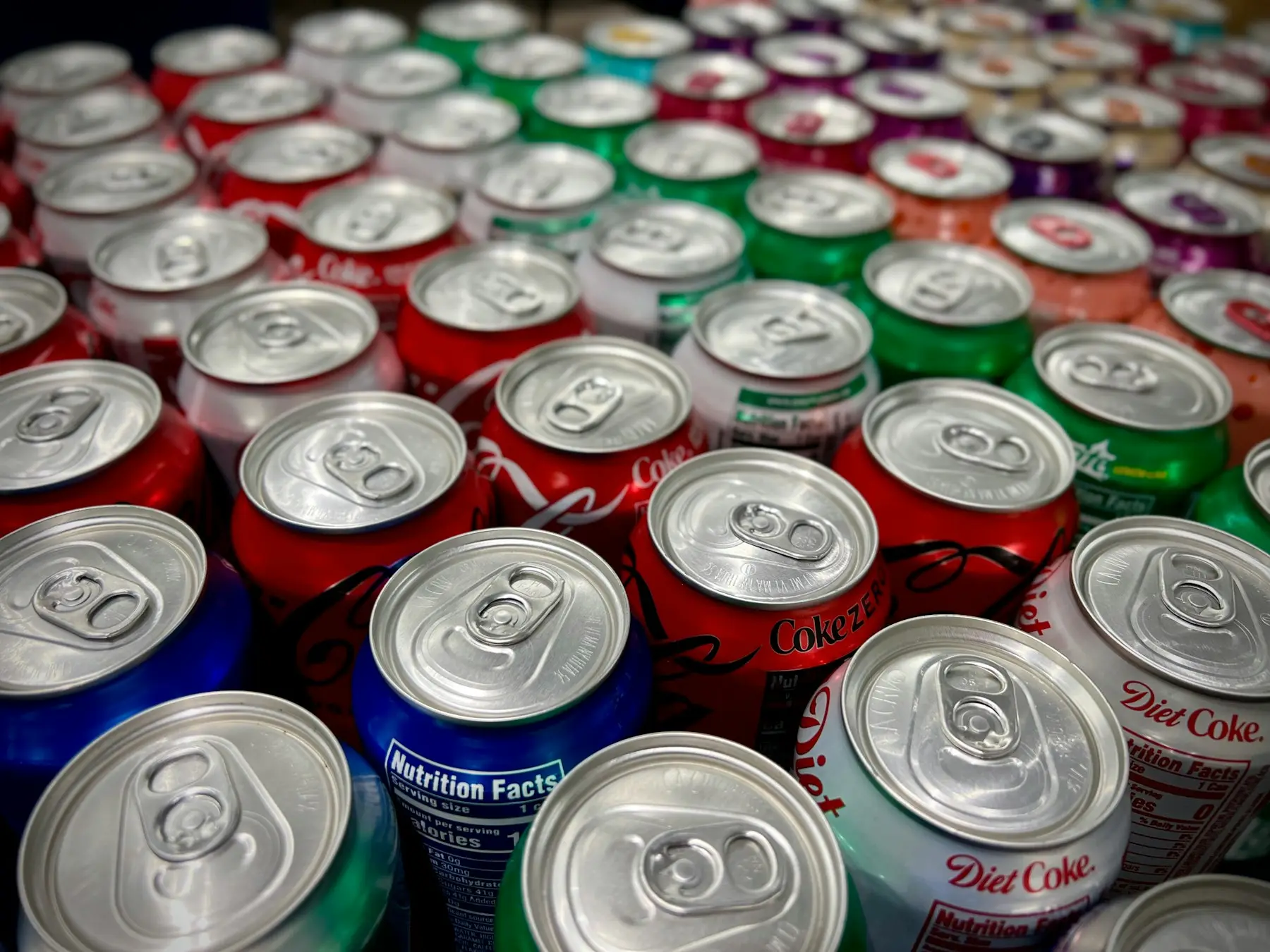
A 12 oz can of Coca-Cola costs $0.58 at Sam’s Club: $20.28 for 35 cans on its website on October 15, 2026 (Sam’s Club). Sell it for $1.50 and take out sales tax at the US average rate, a 10% commission and card fees, and about $0.60 is left. Electricity, the card reader’s monthly fee and the machine’s price come out of that.
Every figure below is a published price, rate or spec, with its source next to it. The vend price and the number of cans sold a month are example inputs, labelled as such; no survey publishes what a soda machine sells. To run the same subtraction with your own numbers, use the profit calculator.
What a can or bottle costs
Prices shown on Sam’s Club’s website on October 15, 2026. Sam’s Club says on each page that prices may vary in club and online.
| Product | Pack price | Per can or bottle | Source |
|---|---|---|---|
| Coca-Cola, 12 oz cans, 35 pack | $20.28 | $0.579 | Sam’s Club |
| Pepsi, 12 oz cans, 36 pack | $17.98 | $0.499 | Sam’s Club |
| Coca-Cola, 20 oz bottles, 24 pack | $32.88 | $1.370 | Sam’s Club |
Sources: Coca-Cola cans, Pepsi cans, Coca-Cola 20 oz. We did not find a Pepsi 20 oz 24-pack on Sam’s Club’s site. Bottler and distributor price lists for vending operators are not published. Case costs for snacks and other drinks are in best vending machine snacks.
Ten states have container deposit laws: California, Connecticut, Hawaii, Iowa, Maine, Massachusetts, Michigan, New York, Oregon, and Vermont (Container Recycling Institute). In California, for example, each container under 24 oz carries a 5¢ California Redemption Value (CalRecycle). A vending machine has no way to charge a deposit to the buyer as a separate line, so in a deposit state it is part of what a can costs you. The examples below leave it out; add your state’s deposit to the product line if it applies.
What a can sells for
No trade survey publishes an average vend price for soda. Two public sources show prices operators charge or bid:
- Jefferson County, Texas, opened bids for its snack and drink vending contract on January 7, 2026. Chapman bid $1.25 for a 12 oz canned soft drink and $2.50 for a 20 oz bottle at a 10% commission. Canteen bid $1.50 to $1.75 a can and $2.75 to $3.00 a bottle, at 10% on annual sales up to $50,000 and 15% to 25% above that (preliminary bid tabulation).
- University of West Florida lists $2.50 for a 20 oz bottled soda in its Coca-Cola United machines, in prices updated August 20, 2025 (UWF).
This page uses $1.50 a can and $2.50 a bottle as example prices. On a public contract or at a site that sets prices in the placement agreement, the location may decide the price for you.
What comes off each vend
Each line below is taken from the vend price, so it is the same whether the machine sells 50 cans a month or 500.
Sales tax
In most states we cover, the vend price is treated as including the tax, so the tax comes out of the $1.50: divide by one plus the rate, then multiply by the rate (sales tax by state). Soda is taxed on its full price in most of them. The examples on this page use the Tax Foundation’s population-weighted average of combined state and local rates, 7.53% on July 1, 2026 (Tax Foundation): $1.50 ÷ 1.0753 × 7.53% = $0.105 a can.
The same can in five states:
| State and rate | How soda is taxed | Tax on a $1.50 can |
|---|---|---|
| Texas, 8.25% | 100% of receipts | $0.114 |
| California, 7.75% | 100% of receipts; CDTFA factor 92.8074% | $0.108 |
| Florida, 7% | Divisor 1.0726 | $0.102 |
| Pennsylvania, 6% | Receipts ÷ 1.06 × 0.06 | $0.085 |
| New York | Exempt at $1.50 or less in any machine, $2.00 or less in one that takes cards | $0.000 |
Sources: 34 TAC §3.293, CDTFA Regulation 1574 and factors, Florida DOR GT-800041, 61 Pa. Code §31.28, NY TB-ST-280. Texas allows local tax up to a combined 8.25% (Comptroller), and Pennsylvania adds 1% in Allegheny County and 2% in Philadelphia (PA Department of Revenue); the Texas and Pennsylvania guides have the local rates.
Commission
The Jefferson County bids above were at 10%, which is $0.15 on a $1.50 can. A vendor blog, VendBuddy, puts commissions at 5% to 20% of gross sales, and cites no survey. The examples below use 10% of the full vend price, tax included; some agreements calculate it after tax.
Card fees
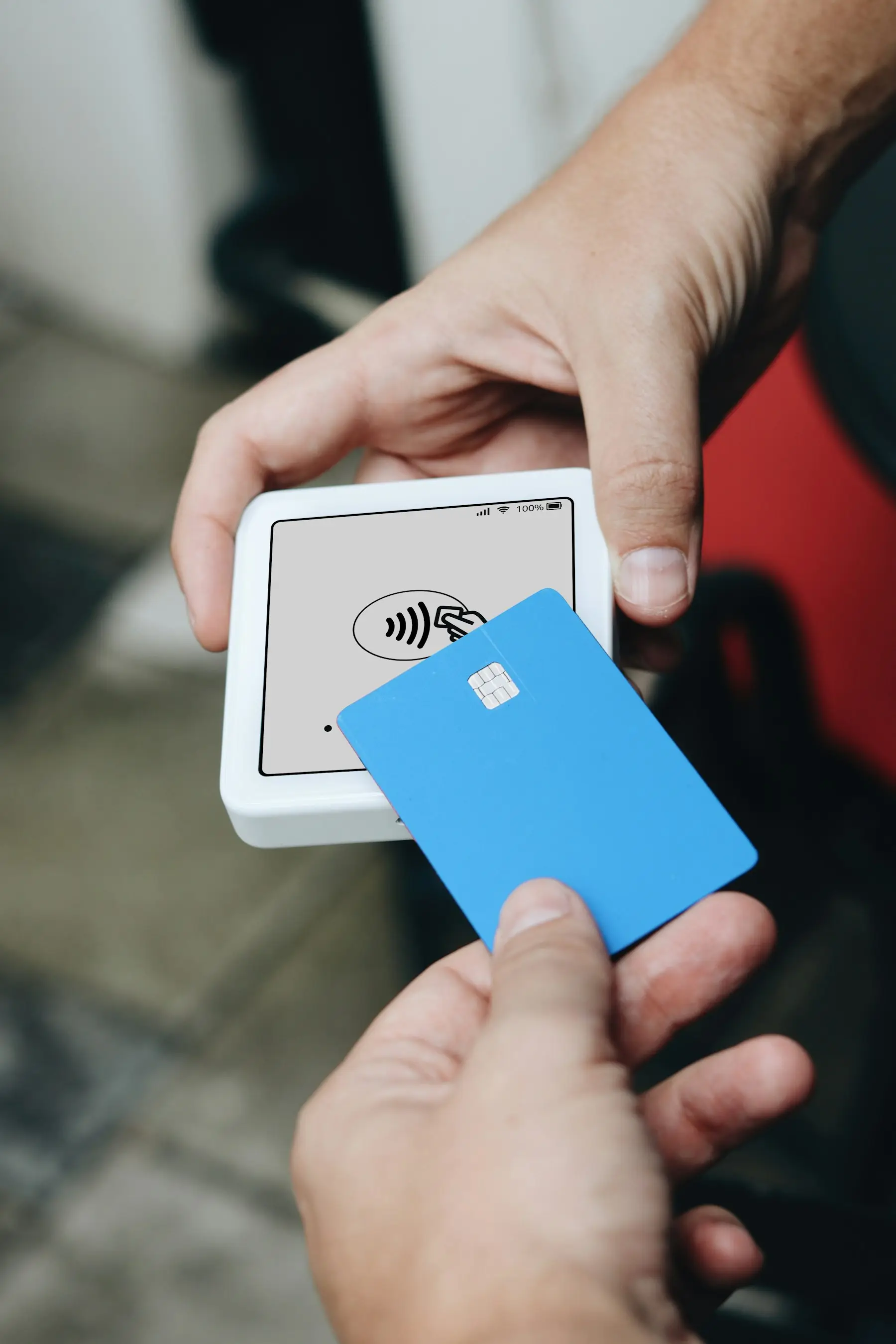
Cantaloupe’s Engage reader charges 5.95% per transaction plus $9.95 a month, and costs $329 (Cantaloupe store). PayRange charges 3.95% plus 2 cents (PayRange). Cash sales carry no processing fee. On Cantaloupe’s network, 78% of food and drink vending sales were cashless in 2025 (Cantaloupe report), so the examples apply 5.95% to 78% of sales: $1.50 × 78% × 5.95% = $0.070 a can. Card readers compared has Nayax’s fees and the contract terms for each.
Profit per can
At the 7.53% average rate, a 10% commission and card fees on 78% of sales, before any container deposit, electricity and the reader’s monthly fee:
| Coca-Cola can | Pepsi can | Coca-Cola 20 oz | |
|---|---|---|---|
| Example vend price | $1.50 | $1.50 | $2.50 |
| Product | $0.579 | $0.499 | $1.370 |
| Sales tax, 7.53% | $0.105 | $0.105 | $0.175 |
| Commission, 10% | $0.150 | $0.150 | $0.250 |
| Card fees | $0.070 | $0.070 | $0.116 |
| Left per unit | $0.596 | $0.676 | $0.589 |
The $2.50 bottle and the $1.50 can leave within a cent of each other, mostly because the bottle costs $0.79 more to buy. I wouldn’t stock a machine with bottles on the strength of the bigger ticket alone; I’d compare what each column leaves per unit at the prices the location will accept.
Price moves the result more than any fee. At Chapman’s $1.25 bid price, the same Coca-Cola can leaves $0.400; at Canteen’s top price of $1.75, $0.792. Product is the largest line at every price, and the Pepsi column shows 8 cents a can between two brands at the same store. I think the buy price is the line a small operator has the most control over, since tax and card rates are set by someone else.
Electricity
ENERGY STAR’s list of certified vending machines gives the Vendo 621-HC, a closed-front can machine holding 544 items, at 2.66 kWh a day, and the larger 721-HC at 2.91 kWh. Crane’s glass-front BevMax 4 models are listed at 3.56 and 3.93 kWh a day (ENERGY STAR). At 2.66 kWh a day, a 621-HC uses 2.66 × 365 ÷ 12 = 80.9 kWh a month.
Commercial electricity rates for July 2026 from the EIA (Electric Power Monthly, Table 5.6.A), applied to that 80.9 kWh:
| Area | Commercial rate, July 2026 | Vendo 621-HC a month | BevMax 4 5800 a month (3.93 kWh a day) |
|---|---|---|---|
| US average | 14.53¢ | $11.76 | $17.37 |
| Texas | 8.47¢ | $6.85 | $10.12 |
| Florida | 11.37¢ | $9.20 | $13.59 |
| California | 30.56¢ | $24.73 | $36.53 |
These are ratings for certified models under ENERGY STAR’s test. An older used machine that is not on the list may draw more; its rating is not published. Whether you pay for power at all depends on the placement agreement. The worked example below counts it as your cost.
What a soda machine costs to buy
A&M Equipment Sales lists a new Vendo 621 at $5,195 and a new Royal 650 at $5,295 (A&M, new drink machines). Its refurbished stock includes a Dixie-Narco 501e at $1,895 and a Royal 650 at $1,995, with a 90-day parts warranty (A&M, used soda machines). Prices checked October 15, 2026. How much a vending machine costs has new drink machines from other sellers, used vending machines has private-sale asking prices and what to check before paying, and where to buy vending machines lists the dealers.
Most older can machines take cash only. Adding the $329 Engage reader brings the refurbished Dixie-Narco to $2,224 and the new Vendo 621 to $5,524. The cost estimator adds freight, registration and insurance to a machine price.
A worked month
Example inputs, not a claim about any machine’s sales: 300 cans of Coca-Cola a month at $1.50, sales tax at the 7.53% US average rate, 10% commission, the Engage reader with 78% of sales on cards, and a Vendo 621-HC at the July 2026 US average commercial rate. No container deposit is included.
| Gross sales | $450.00 |
|---|---|
| Product, 300 × $0.5794 | −$173.83 |
| Sales tax, $450 ÷ 1.0753 × 7.53% | −$31.51 |
| Commission, 10% | −$45.00 |
| Card fees, 5.95% × $351 + $9.95 | −$30.83 |
| Electricity, 80.9 kWh × 14.53¢ | −$11.76 |
| Left before the machine and your time | $157.07 |
That is $0.52 a can, or 34.9% of gross sales. In California the 5¢ CRV would add $15.00 and electricity at 30.56¢ another $12.97. Paying back the machine from $157.07 a month:
| Machine | Cost with reader | Payback at 300 cans a month |
|---|---|---|
| Refurbished Dixie-Narco 501e, A&M | $2,224 | 14.2 months |
| New Vendo 621, A&M | $5,524 | 35.2 months |
The profit calculator does the same arithmetic with your inputs: enter gross sales, product cost as a share of sales ($173.83 of $450 is 39%, plus any container deposit), card fees, commission, and electricity and tax as other monthly costs.
Break-even cans per month
In the example, each can leaves $1.50 − $0.579 product − $0.105 tax − $0.15 commission − $0.070 card fees = $0.596. The reader’s $9.95 and $11.76 of electricity are fixed at $21.71 a month. So:
- Cans to cover monthly costs: $21.71 ÷ $0.596 = 37 cans. Below that, the machine loses money every month.
- Cans to pay back the machine in a set number of months: (machine cost ÷ months + $21.71) ÷ $0.596.
| Machine | Cost with reader | Cans a month, 12-month payback | Cans a month, 24-month payback |
|---|---|---|---|
| Refurbished Dixie-Narco 501e | $2,224 | 347 | 192 |
| New Vendo 621 | $5,524 | 809 | 423 |
A new Vendo 621 needs more than twice the monthly sales of the refurbished machine to pay back on the same schedule. For a first soda machine at a location with no sales history, I’d buy refurbished with a parts warranty and keep the difference until the location has shown what it sells.
Compared with a smart cooler
The only machine figures we publish from our own route are for a smart cooler, and they are a different kind of machine with a different cost stack. One of our smart coolers at a gym sells about $500 a month and keeps $205.25 after product, platform and card fees, and a 10% commission (how much vending machines make). The cooler cost $4,000, which $205.25 pays back in 19.5 months (are vending machines profitable). That receipt has no sales tax, container deposit or electricity line, so it is not directly comparable with the soda example above. Smart coolers compared covers what a cooler sells that a can machine cannot, and what its platform fees add.