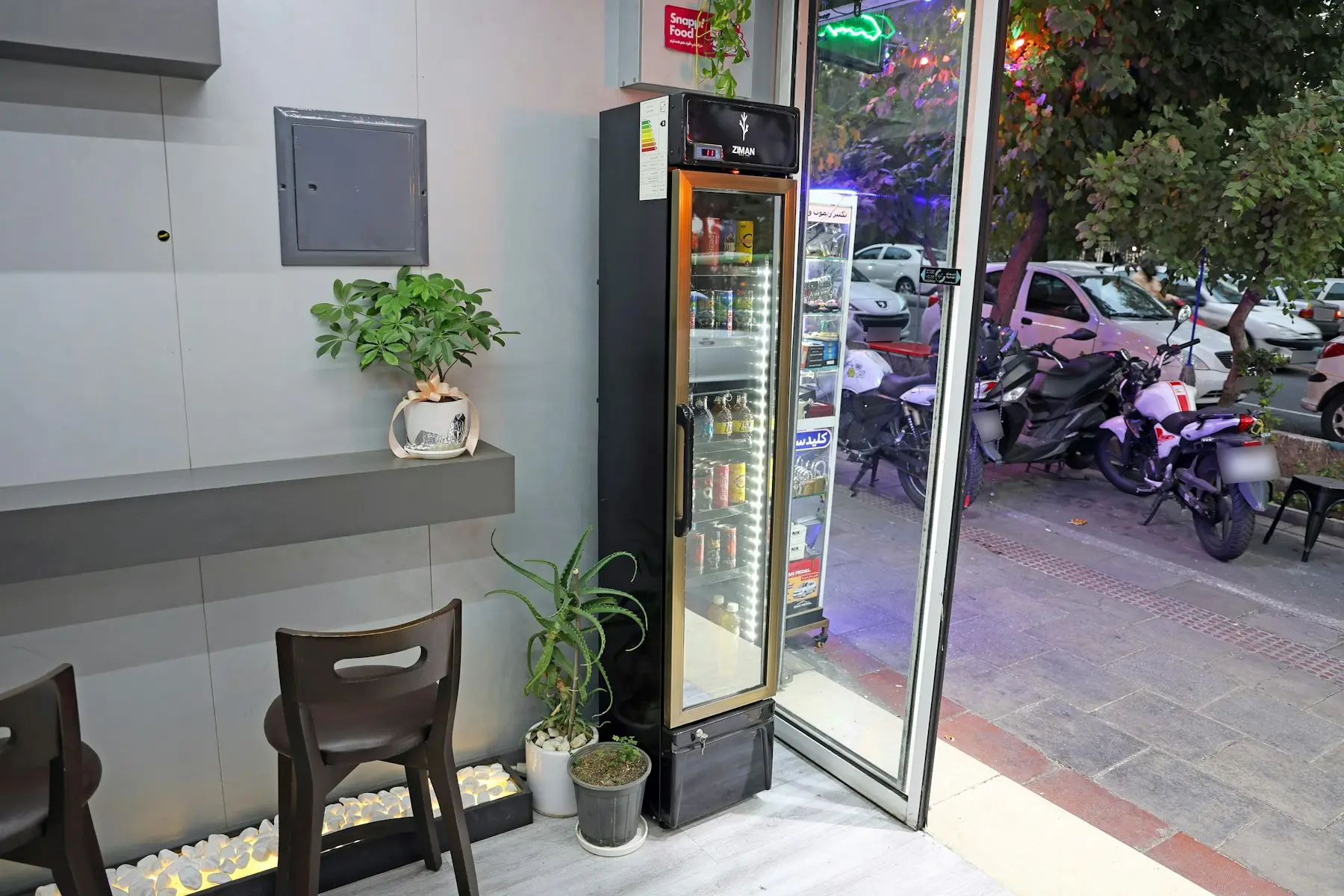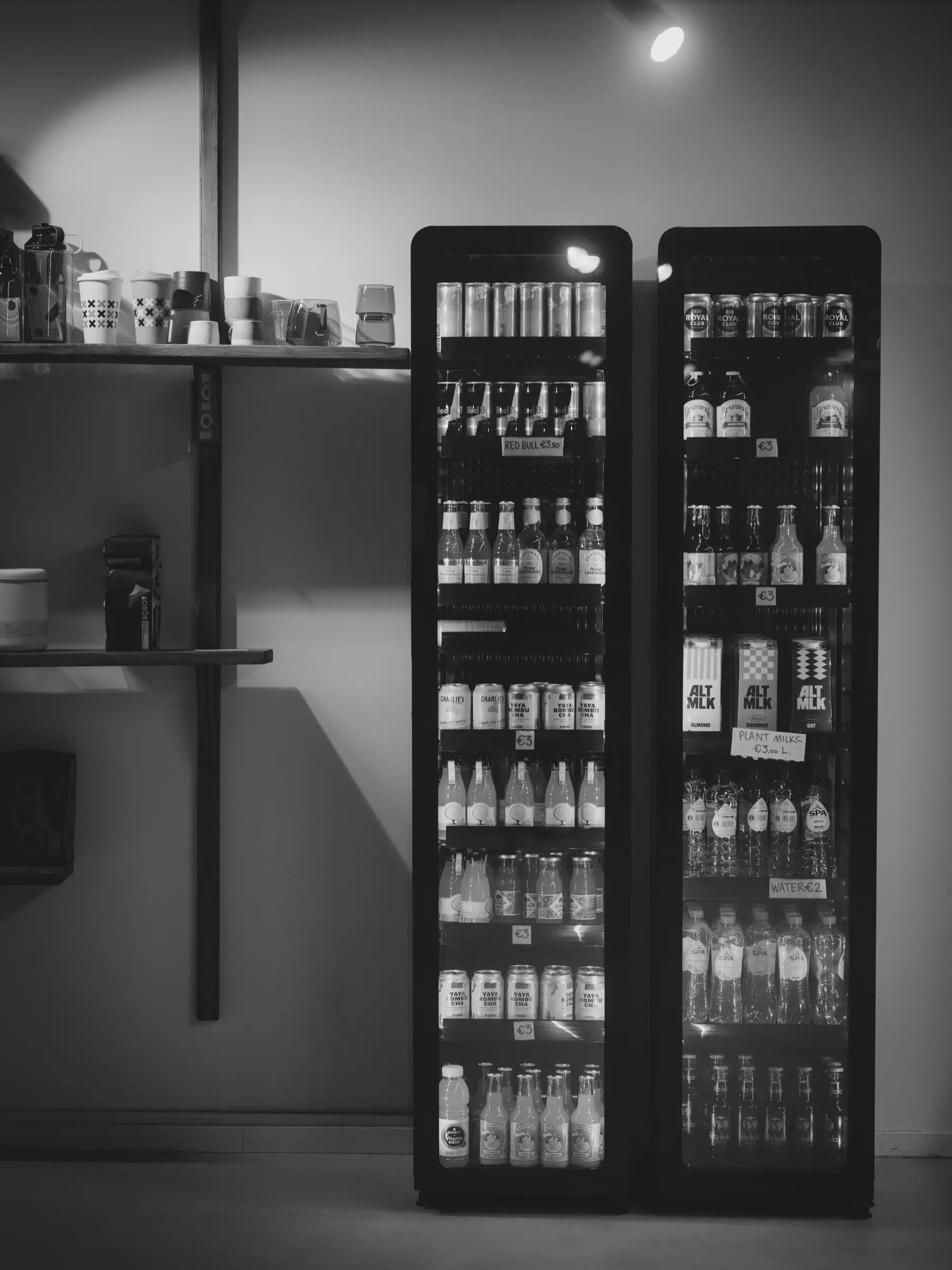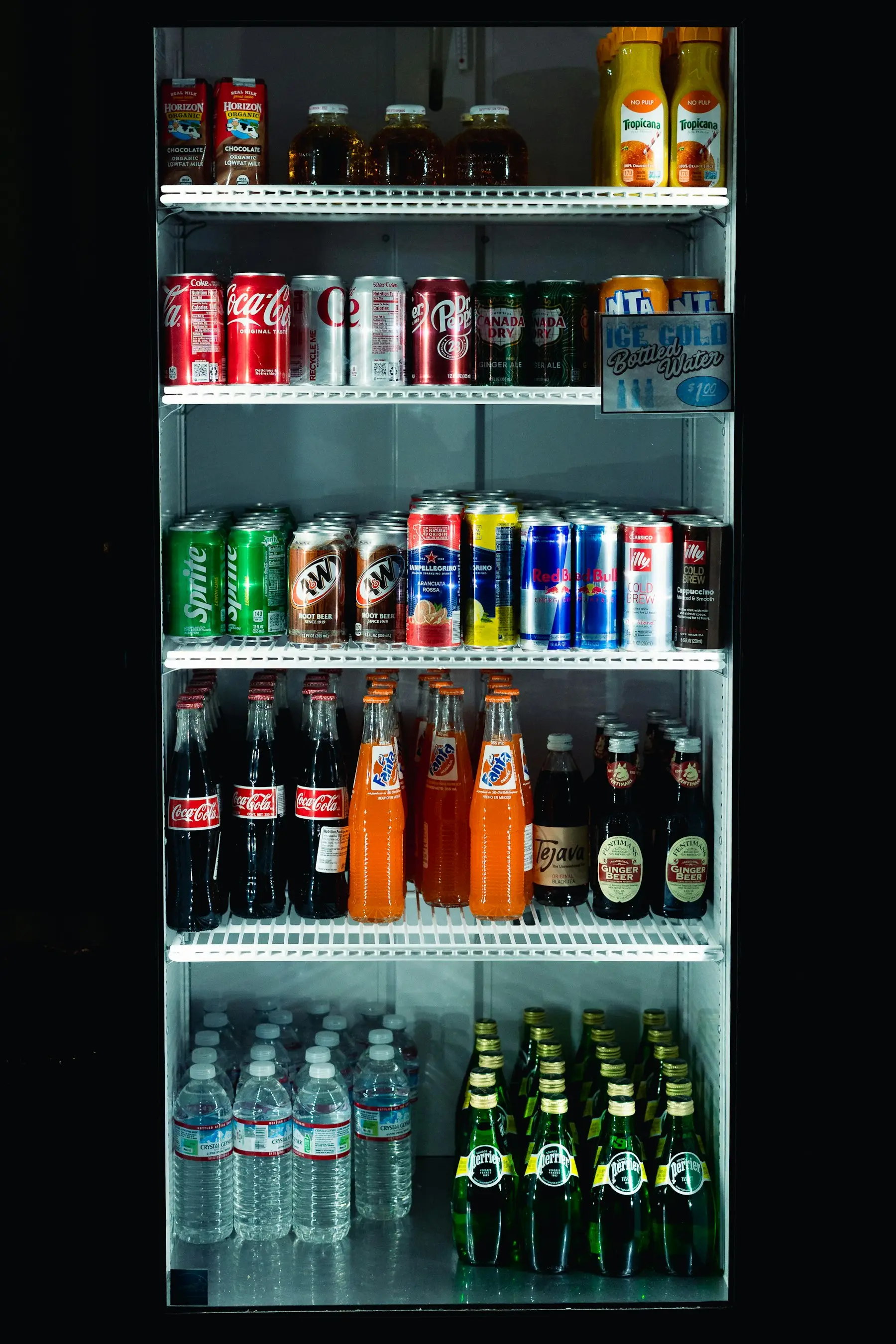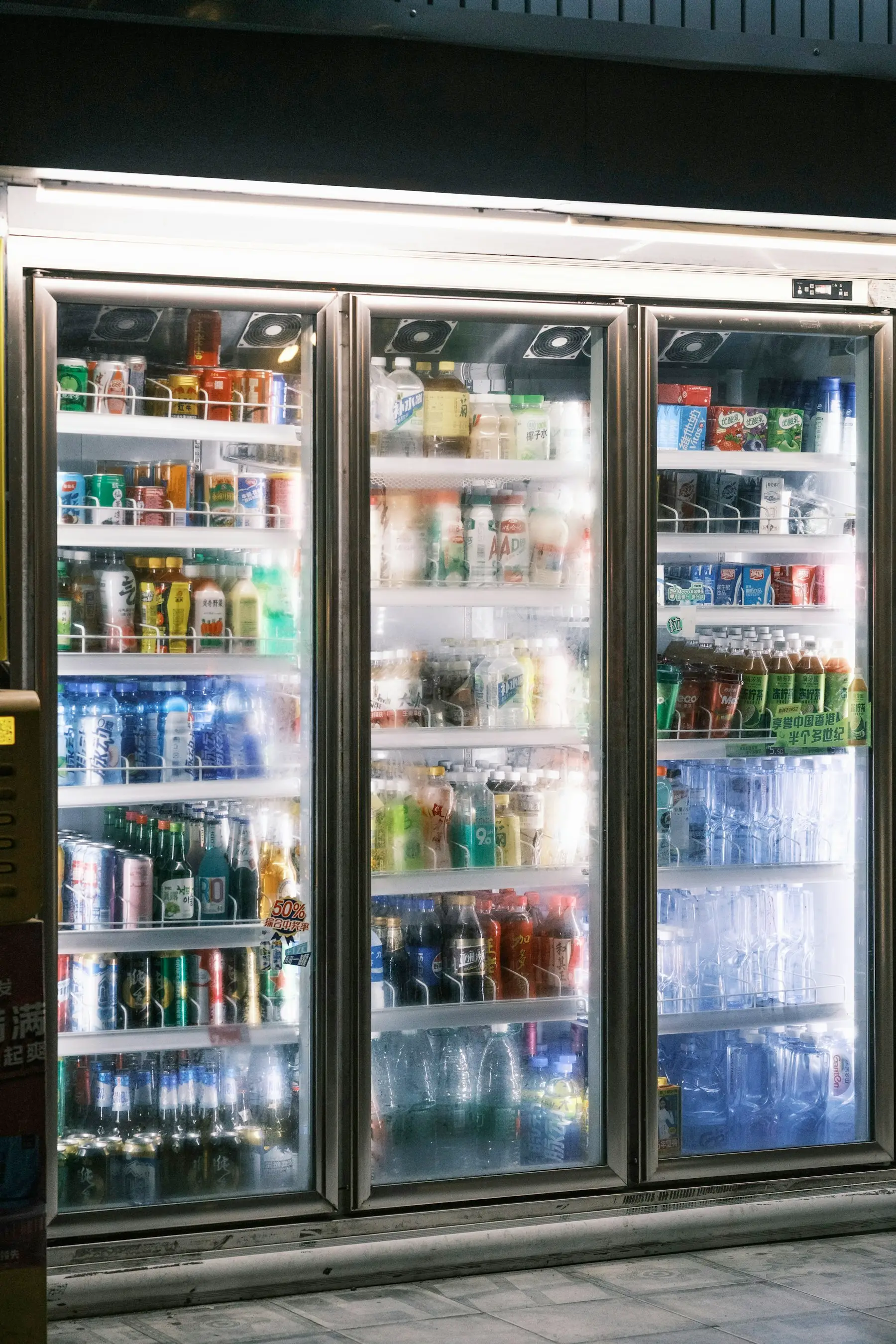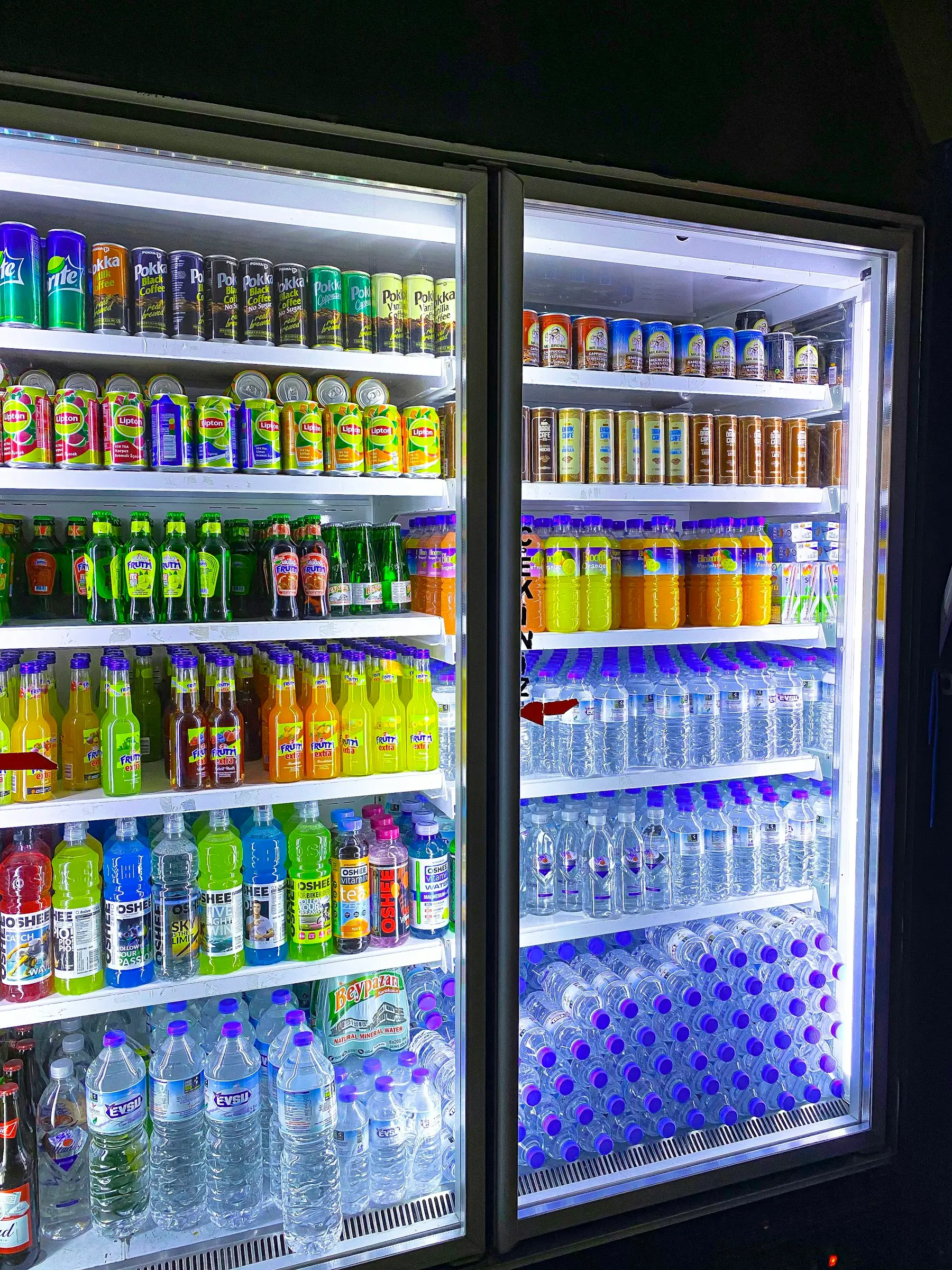
One of our smart coolers sells about $500 a month at a gym. After product, platform and card fees, and a 10% commission to the gym, $205.25 of that is left before our time, and the $4,000 cooler pays for itself in 19.5 months. No trade survey or cooler platform publishes what the average smart cooler sells. The sellers’ own figures run from about $300 to more than $3,000 a month, and none of them publishes the sales reports behind its number.
The math, line by line:
- Product: 35% × $500 = $175.
- Fees: 5.95% × $500 = $29.75, plus $40, is $69.75. This one line covers the cooler platform and card processing.
- Commission: 10% × $500 = $50.
- Operating profit: $500 − $175 − $69.75 − $50 = $205.25, or 41.1% of sales.
- Payback: $4,000 ÷ $205.25 = 19.49, about 19.5 months.
None of this counts the hours spent stocking the cooler, the drive, sales tax, or shrink. Are vending machines profitable adds those, plus loan interest, to the same receipt. To put in your own location’s numbers, use the profit calculator; its smart cooler preset starts from this cooler.
“AI vending machine” and “smart vending machine” are seller names for the same kind of equipment: a locked glass-door fridge that charges the card for whatever leaves the shelves. AI vending machines covers how the cameras and weight sensors work. The revenue math below applies to all of them.
Smart cooler revenue per month: what is published
Trade surveys and payment data
Automatic Merchandiser’s 2026 State of the Industry summary says smart coolers were 33.5% of the equipment its respondents had deployed, and more than half of respondents operate at least one. It gives no sales per cooler, no price per item, and no margin.
Cantaloupe publishes the average purchase on its network. In 2025 its Smart Store coolers averaged $4.49 a purchase, the highest of any self-service format it tracks, and active Smart Store locations grew from 71 to 572 (Cantaloupe). The report gives no sales per Smart Store.
For per-device figures from the payment companies’ filings, which mix every kind of machine they serve, see how much vending machines make.
Vendor claims
Companies that sell smart coolers publish their own revenue figures. Each one below is a claim made by the seller, on a page that sells the machine.
| Seller | What it claims | Basis given |
|---|---|---|
| Micromart | $14,400 a year per machine on average, about $1,200 a month | None; does not say whether sales or profit |
| SandStar | $500 to $3,000+ a month per machine at high-traffic sites | None |
| VMFS, FAQ | $300 to $900+ a month for a well-placed unit | None |
| VMFS, calculator default | $2,268 a month | 210 passersby a day, 6% buy, 2 items at $3.00 |
| VMFS, hospital lobby case | $1,350 a month in sales | Location type only |
| VMFS, office complex case | $780 a month in sales, about 120 employees | Location type only |
- Micromart’s FAQ says “On average, Micromart operators earn $14,400 annually per machine.” Its Smart Fridge costs $6,295 for one unit (Micromart).
- SandStar’s FAQ gives $500 to $3,000 or more a month in revenue per machine for high-traffic sites, and says most operators break even within 6 to 18 months.
- VMFS sells an AI smart cooler at $4,950. Its ROI calculator’s default shows $2,268 a month from 378 sales and a monthly profit of $895. The costs it lists beside that, $952 for product, $352 for card fees and commission and $117 for platform fees, add up to a profit of $847. The same page lists two case studies by location type, and says results are not guaranteed.
Micromart also publishes a case study of an operator with 14 of its coolers in seven residential buildings. It gives no sales figures. It says he won the sites with a $1,000 signing bonus, a 5% revenue share and five-year contracts.
I’d treat every row in that table as a seller’s ceiling until the seller hands over sales reports from coolers like the one you would buy, at locations like yours. Our $500 month sits at the bottom of SandStar’s high-traffic range and below Micromart’s average.
We found no smart cooler revenue figure from NAMA, 365 Retail Markets, Vendera or Byte.
The same cooler at other sales levels
Product, the percentage part of the fees, and commission all scale with sales: 35% + 5.95% + 10% = 50.95% of each dollar. The $40 does not. So operating profit = 49.05% of sales − $40.
The rows below are that formula on our cost ratios. Only the $500 row is a cooler we run.
| Monthly sales | Operating profit | Share of sales kept | Payback on $4,000 |
|---|---|---|---|
| $250 | $82.63 | 33.1% | 48.4 months |
| $500 (our gym cooler) | $205.25 | 41.1% | 19.5 months |
| $750 | $327.88 | 43.7% | 12.2 months |
| $1,000 | $450.50 | 45.1% | 8.9 months |
| $1,200 (Micromart’s claimed average, if it is sales) | $548.60 | 45.7% | 7.3 months |
| $1,500 | $695.75 | 46.4% | 5.7 months |
Three thresholds from the same formula:
- Covering the fixed fee: $40 ÷ 0.4905 = about $82 a month in sales before the cooler earns anything.
- Payback in 24 months: ($4,000 ÷ 24 + $40) ÷ 0.4905 = about $421 a month.
- Payback in 12 months: ($4,000 ÷ 12 + $40) ÷ 0.4905 = about $761 a month.
A cooler that sells $500 a month takes in about $16.67 a day. At Cantaloupe’s $4.49 Smart Store average, that is $500 ÷ $4.49 = about 111 purchases a month, or under four a day.
What moves the number
People on site
Sales are purchases times the average purchase, and purchases come from the people who walk past. Micromart recommends a location with 150 or more people on site each day (Micromart FAQ). VMFS’s calculator default assumes 210 passersby a day with 6% buying (VMFS); we found no survey behind that conversion rate. Vending machine locations covers how to estimate headcount before signing a site, and the location scorer rates a site from 0 to 100.
Price per item
The average Smart Store purchase on Cantaloupe’s network was $4.49, against $3.02 at micro markets and $2.01 across vending (Cantaloupe). On a cooler, a shopper can take several items in one door opening. At the same number of purchases, a cooler averaging $4.49 sells more than twice what one averaging $2.01 does.
Product cost
Product is the largest line on our receipt. No survey publishes an average cost of goods for smart coolers. On a $500 month with our other costs, each five points of product cost moves profit by $25:
| Product cost | Operating profit | Payback on $4,000 |
|---|---|---|
| 30% | $230.25 | 17.4 months |
| 35% (ours) | $205.25 | 19.5 months |
| 40% | $180.25 | 22.2 months |
| 45% | $155.25 | 25.8 months |
If you stock fresh food, count what you throw away as product cost.
Platform fees
Platforms split their charges between a fixed monthly fee, a percentage of sales, and sometimes a charge per purchase. On the same $500 month, the platforms that publish exact fees take $64.75 to $177.50, card processing included (smart cooler monthly fees). Ours, at $69.75, are near the low end.
Machine price and fees come together, so the payback changes with both. Holding product at 35%, commission at 10% and 200 purchases a month:
| Cooler | Price | Fees on $500 | Operating profit | Payback |
|---|---|---|---|---|
| Ours | $4,000 | $69.75 | $205.25 | 19.5 months |
| VMFS AI Smart Cooler, with its $450 card reader, on Wi-Fi | $5,400 | $93.74 | $181.26 | 29.8 months |
| Micromart Smart Fridge, on Wi-Fi | $6,295 | $100.00 | $175.00 | 36.0 months |
| Byte Smart Fridge, before RFID tags | $5,500 | $177.50 | $97.50 | 56.4 months |
Prices are from VMFS, Micromart and Byte. VMFS and Micromart charge freight on top; Byte’s pricing page does not mention it. The fee totals are worked out in smart cooler monthly fees. Byte’s tags cost $0.15 each on top (Byte).
At $500 a month, ours pays back in about two-thirds the time of the VMFS cooler and about a third of the time of Byte’s. For a site I expected to stay near that level, I’d weigh the machine price and the fixed monthly fee ahead of any feature list.
Commission
Our standard commission is 10% of gross sales. A vendor blog, VendBuddy, puts commissions at 5% to 20% of gross sales and gyms at 10% to 18%; it cites no survey. VMFS gives 10% to 20% as typical. On our $500 month:
| Commission | Operating profit | Payback on $4,000 |
|---|---|---|
| 0% | $255.25 | 15.7 months |
| 5% | $230.25 | 17.4 months |
| 10% (ours) | $205.25 | 19.5 months |
| 15% | $180.25 | 22.2 months |
| 20% | $155.25 | 25.8 months |
Each five points is $25 a month at this sales level, the same as five points of product cost. I think commission is the term to settle before the cooler goes in, because it is the one line on the receipt fixed by a signature.
Shrink
No survey publishes shrink for locked smart coolers. In the 2026 survey, under a paragraph on micro market theft, nearly two-thirds of respondents reported shrink below 5% and 12.5% reported more than 10% (Automatic Merchandiser). The summary does not split those figures by format, and it says smart coolers likely contribute to the lower numbers. Byte says mischarges across its fleet average about 0.4% of transaction volume (Byte).
As arithmetic on our receipt, shrink of 2% of sales takes profit to $195.25 and payback to 20.5 months. At 5% it is $180.25 and 22.2 months. With no published figure for locked coolers, I’d keep a shrink line in any forecast. Industry numbers has the survey’s shrink figures in full.
Checking a seller’s number
When a seller quotes monthly revenue, ask what it is: gross sales, sales after fees, or profit. Micromart’s $14,400 does not say. Then ask for the location type and headcount behind it, and run it through the profit calculator with your own product cost and commission.
Before signing for a cooler, smart coolers compared has prices, fees and warranties for each model.