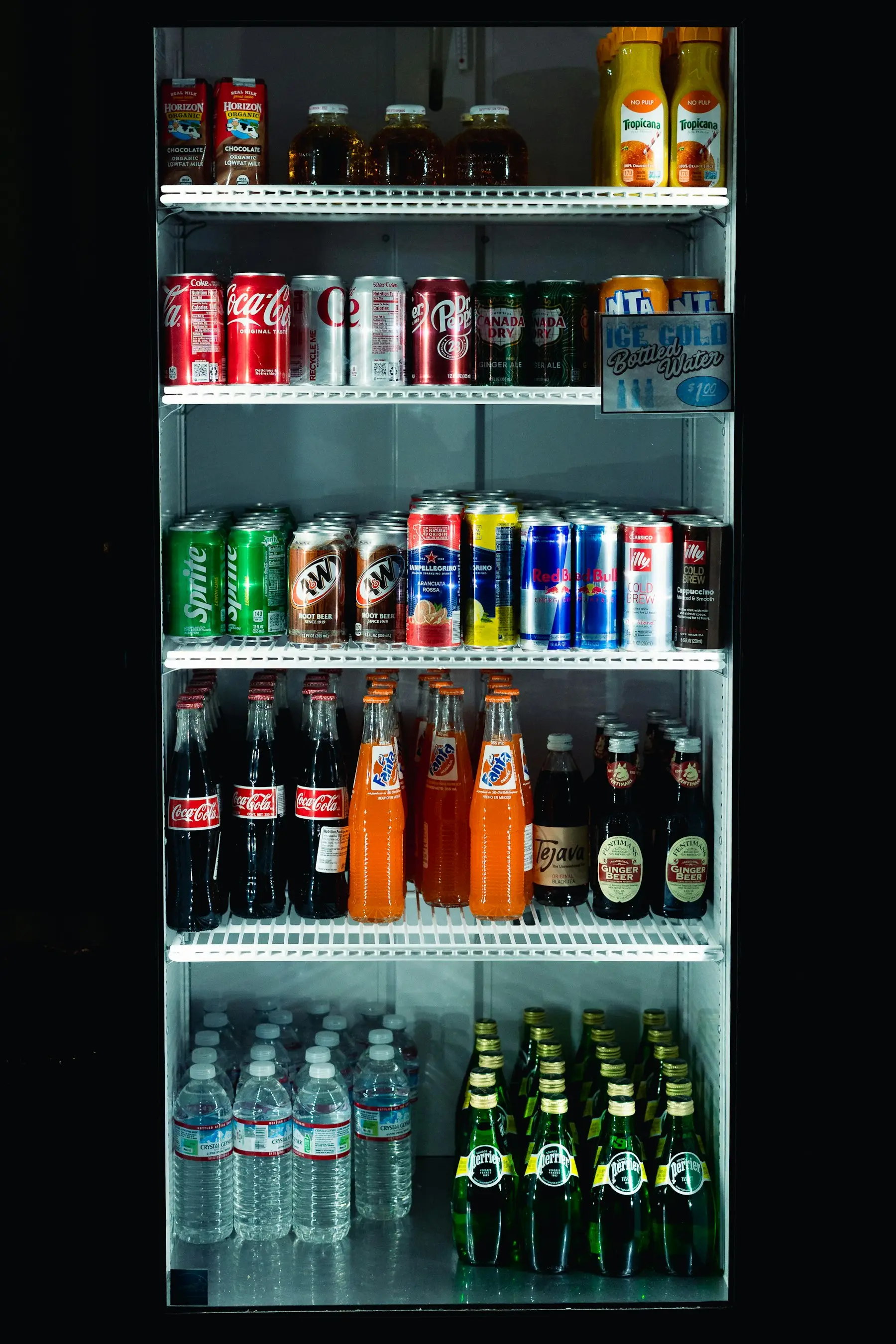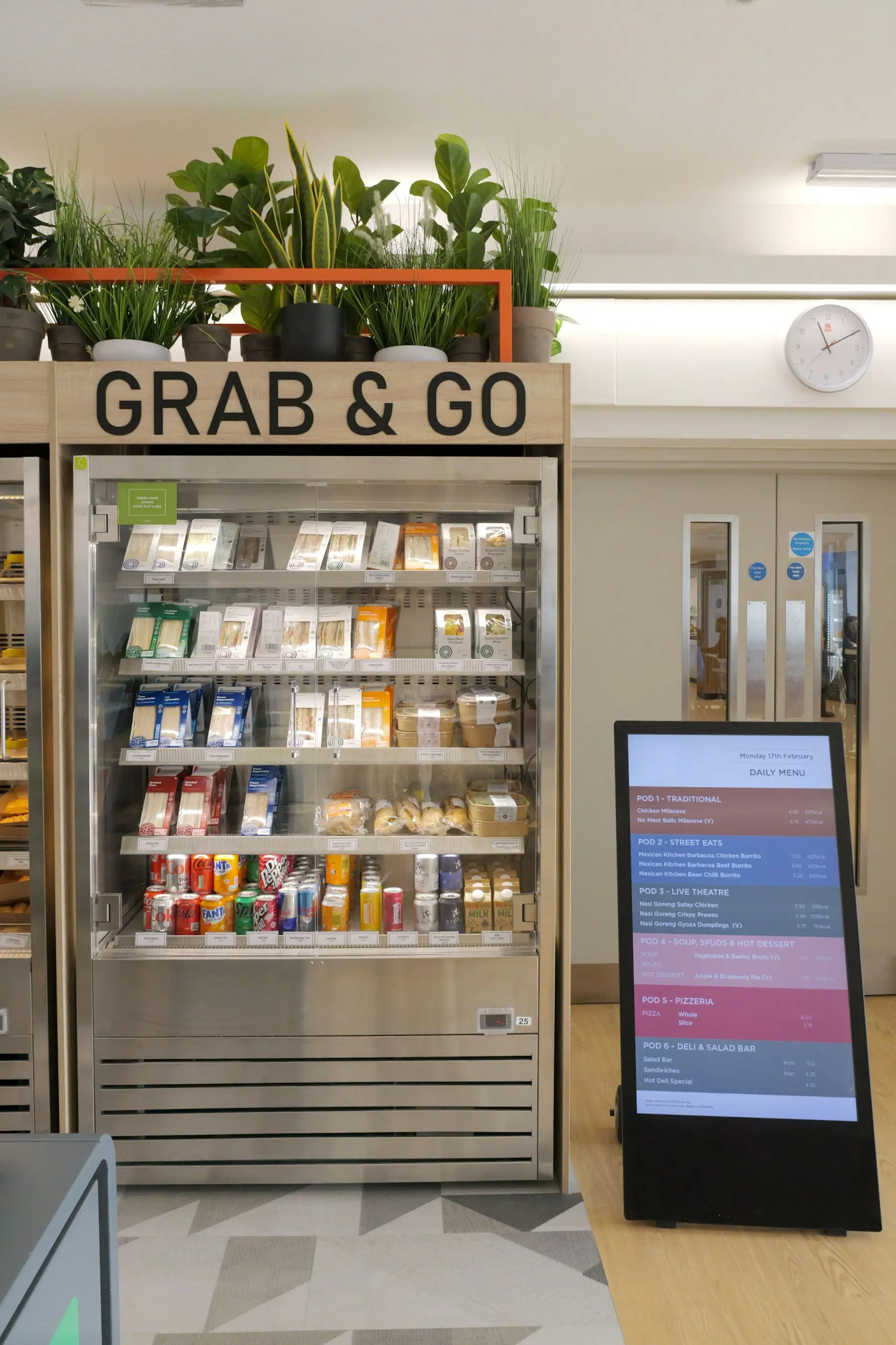
A machine that sells sandwiches, salads, milk, or yogurt holds time/temperature control for safety (TCS) food, and that puts it under the food code. The FDA Food Code 2022 requires it to stay at 41°F or below and to have an automatic control that stops sales when it cannot, allowing no more than 30 minutes above 41°F right after it is filled or restocked (FDA Food Code 2022, §4-204.111). The food has to be sold in the package it was put in at the food establishment or food processing plant where it was prepared, and food made in a private home is barred (§3-305.13, §3-201.11).
A machine holding only prepackaged chips, candy, and canned soda is outside the Food Code’s definition of a food establishment (§1-201.10(B)). Fresh food is what brings the health department in. States adopt the Food Code on their own schedule and change parts of it: Florida licenses each fresh-food machine at $21 a year (DBPR), and New York and California allow 45°F in vending machines (10 NYCRR §14-5.40, CalCode §113996).
What counts as TCS food
The Food Code defines TCS food as food that “requires time/temperature control for safety” to limit pathogen growth or toxin formation (§1-201.10(B)). The definition names:
- raw or heat-treated animal food, which covers deli meat, cooked chicken, eggs, and dairy;
- heat-treated plant food, such as cooked rice, pasta, and beans;
- cut melons, cut leafy greens, cut tomatoes, and raw seed sprouts;
- garlic-in-oil mixtures that have not been modified to stop pathogen growth.
Two tables in the same definition handle everything else by pH and water activity. A food can be outside TCS if it is acidic or dry enough, and a product the tables mark “PA” needs a product assessment. Food in an unopened hermetically sealed container, commercially processed to stay sterile without refrigeration, is also excluded. The maker’s label and storage statement tell you which side of the line a product sits on.
The definition of a food establishment includes a “vending location” and the central preparation facility or vehicle that supplies it, unless that vending location holds its own permit. It excludes “an establishment that offers only prePACKAGED FOODS that are not TIME/TEMPERATURE CONTROL FOR SAFETY FOODS” (§1-201.10(B)). A food establishment needs a permit, and the Food Code asks for the application at least 30 calendar days before opening (§8-301.11, §8-302.11).
FDA Food Code 2022 rules for a fresh food vending machine
| Section | What it requires |
|---|---|
| §1-201.10(B), “vending machine” | A self-service device that dispenses unit servings of food after a coin, card, key, or electronic transaction, without being replenished between sales |
| §3-201.11 | Food from sources that comply with law; nothing prepared in a private home; packaged food labelled under 21 CFR 101 |
| §3-305.13 | TCS food dispensed in the package it was placed in at the food establishment or processing plant where it was prepared |
| §3-306.12(B) | Condiments in individual packages, or in dispensers filled at an approved location |
| §3-501.16(A) | Cold TCS food at 41°F or less; hot at 135°F or above |
| §3-501.17(A) | Ready-to-eat TCS food made in a food establishment and held over 24 hours: marked with a date, at most 7 days at 41°F, day of preparation counted as day 1 |
| §3-501.18(B) | That food, in a vending machine with an automatic shutoff, discarded once it passes the 7-day limit |
| §3-602.11 | Food packaged in a food establishment labelled with common name, ingredients, net quantity, maker or distributor, and major food allergens |
| §4-204.14 | Self-closing door on the dispensing compartment, snack machines included, in an unsheltered outdoor area or when the machine is not under full-time staff supervision |
| §4-204.111 | Automatic shutoff; refrigerated air no more than 30 minutes above 41°F after filling, servicing, or restocking; hot machines no more than 120 minutes below 135°F |
| §4-204.112 | Temperature sensor placed in the warmest part of a refrigerated unit |
Source: FDA Food Code 2022.
The shutoff has two parts. The machine has to stop vending after a power failure, mechanical failure, or anything else that leaves it unable to hold temperature. It has to stay stopped “until the machine is serviced and restocked” with food that was kept at the right temperature (§4-204.111(A)). In practice the food that warmed up comes out. The FDA’s annex says the control is commonly called the “public health control,” that a machine’s storage area is very likely to go above the limit during stocking and servicing, and that the control allows a limited time above it (Annex 3).
Date marking under §3-501.17(B) applies to processing-plant food when its original container is opened in a food establishment. A sandwich sold sealed in the maker’s package is never opened by the operator, so this section does not ask the operator to add a date, and the date on the package is the maker’s. The section also says a date set by the establishment cannot run past a manufacturer’s use-by date based on food safety. Ask your inspector how they apply this to the products you plan to stock.
Which Food Code your state uses
The FDA tracks adoption each year. In its 2024 report, 7 states had adopted the 2022 edition, covering 16.06% of the U.S. population, and 24 had adopted the 2022 or 2017 edition (FDA).
| State | Agency | Food Code edition in the FDA’s 2024 report |
|---|---|---|
| Illinois | Department of Public Health | 2022 |
| Texas | Department of State Health Services | 2017 with supplement |
| Florida | DBPR (restaurants); FDACS (retail food stores) | 2017; 2017 |
| New York | Department of Health (restaurants); Agriculture and Markets (retail food stores) | None; 2001 |
| California | Department of Public Health | 2005, long form (the California Retail Food Code) |
Source: FDA, Food Code adoption 2024.
A long-form adoption, like California’s, rewrites the code into state law and can drop or change sections. That is why the 41°F shutoff in the FDA model does not appear in every state’s rules.
How five states permit fresh food vending
| State | Who permits a TCS machine | Cold holding in a vending machine | Snack and soda machines |
|---|---|---|---|
| Illinois | State or local health department under the 2022 Food Code | 41°F | Excluded as prepackaged non-TCS |
| Texas | City or county health department where one exists; DSHS does not permit vending machines | 41°F (Food Code 2017) | No state permit |
| Florida | DBPR Division of Hotels and Restaurants, $21 a year | Proper temperature with automatic shutoff | Excluded from DBPR licensing |
| New York (outside NYC) | County or city health department | 45°F; two-hour limit between 45°F and 140°F | Counties differ |
| California | County or city environmental health department | 45°F | Outside the vending machine definition |
Illinois
Illinois is one of the 7 states on the 2022 Food Code. The Department of Public Health adopted it by reference with its own modifications and additions, which the FDA lists as manual short form (FDA), so the sections in the table above are the baseline and the state rule can change details. Chicago adds its own Retail Food Establishment license and machine labelling rules; see Illinois vending machine permits.
Texas
The Department of State Health Services excludes “food and beverage vending machines” from its permit and fee requirements (25 TAC §229.371(6)(C)(x)). Cities and counties with their own health departments can still permit them. Texas has a separate rule for unattended self-service food markets: 24/7 video surveillance kept for 14 days, tamper-evident packaging, a sign at the payment kiosk naming who to contact, and an automatic shutoff, or a plan the regulatory authority approves, on any refrigerated TCS display, with the same 41°F and 30-minute limit as the Food Code (25 TAC §228.225). City fees are in Texas vending machine permits.
Florida
The DBPR licenses vending machines that “dispense unit servings of time/temperature control for safety (potentially hazardous) food” (Rule 61C-1.002), and its guide names milk cartons and packaged sandwiches as examples. A machine that dispenses only food or drinks other than potentially hazardous food is excluded (§509.013(5)(b)). The guide lists an accurate ambient air thermometer, an automatic shutoff, food stored and prepared in “an approved, licensed food service establishment,” never a private residence, and a DBPR decal on the machine. Bulk or unpackaged food must be date-marked and less than 7 days old (DBPR guide). The license is $21 for a full year or $15.50 for a half year (DBPR fees).
FDACS permits “unattended food establishments (also known as micro markets),” which sell packaged food or whole fruit through an automated payment system behind controlled entry, at $175 a year (Rule 5K-4.020). The per-machine question and the smart cooler question are covered in Florida vending machine permits.
New York
Outside New York City, the State Sanitary Code sets potentially hazardous food at 45°F or below, or 140°F or above, with no more than two hours in total between those limits. It allows a 30-minute recovery period after loading, requires automatic controls that stop vending until the operator services the machine, and requires labels showing “the name and address of the establishment where prepared and packaged” (10 NYCRR §14-5.40).
New York City handles fresh food machines separately. In 2019 its health department decided fresh-salad machines should be inspected and letter-graded like restaurants, at the $280 restaurant fee, and Farmer’s Fridge shut down 55 machines in the city to comply (Vending Times). County fees and the city’s rules are in New York vending machine permits.
California
The Retail Food Code defines a vending machine as a device that dispenses food and “operates in conjunction with a COMMISSARY,” and excludes machines that sell only nuts, popcorn, gum, candy, cookies, crackers, similar snacks, non-potentially-hazardous drinks, and prepackaged ice (CalCode §113938). Potentially hazardous food held for dispensing in a vending machine may be kept at 45°F or below, against 41°F elsewhere (§113996).
Section 114145 adds rules of its own: the owner’s name, address, and phone number posted on the machine; potentially hazardous food sold in the original package from the commissary or processing plant, with bulk potentially hazardous food prohibited; a cleaning and sanitizing record in each machine, current for 30 days; and construction to NSF or NAMA standards. The code has no automatic shutoff section. County permit fees are in California vending machine permits.
Every state here leaves the smart cooler question open. I’d send the county or city health department the cooler’s make and model and the product list, and ask in writing whether it is a vending machine, a micro market, or a retail food store, before buying one for fresh food.
Where the food can come from
The Food Code allows three routes, and all of them lead back to a permitted kitchen or plant (§3-201.11, §3-305.13).
- 1Buy from a food processing plantPackaged, labelled, and dated by the manufacturer. The operator never opens the package, so there is no repacking or labelling to do.
- 2Buy from a permitted restaurant or commissaryLocal sandwiches and salads packed at a licensed kitchen. Its label has to carry the items in Food Code §3-602.11, and a Florida or California inspector will expect the kitchen to hold its own permit.
- 3Run your own commissaryA licensed kitchen you operate. It needs its own food permit, and in Texas, packaging food or selling a product under your own label requires a DSHS food manufacturer license.
Texas spells out the third route. Anyone who “manufactures and packages food for sale” must be licensed as a food manufacturer, a company that has another firm make a product with its own name on the label counts as one, and “no manufacturing can take place in the home kitchen” (DSHS).
For a first fresh-food cooler, I think a processing plant’s packaged sandwiches are the simpler start. The label, allergens, and date are the maker’s, and the permit question shrinks to the machine itself.
Suppliers that publish details
Few fresh-food makers publish an operator program, minimums, or delivery terms. Two that publish product details for this channel:
- Tyson Foodservice, BIG AZ. The Biscuit Stacker breakfast sandwich page calls it “perfect for resale in vending and convenience store locations.” It ships frozen with a listed shelf life of 270 days, with the instruction “keep frozen, refrigerate to thaw and serve” (Tyson Foodservice). The page does not say how many days it lasts once thawed.
- Deli Express (E.A. Sween). A 2009 trade notice gave a shelf life of 30 days refrigerated on all of its wedge sandwiches (Vending Market Watch). Its current site does not publish a shelf life.
Neither publishes a minimum order or pricing for operators, so the case price is whatever your distributor or the maker quotes.
Shelf life, date labels, and spoilage
Shelf life sets how often someone has to visit the machine. Food made in a food establishment gets at most 7 days at 41°F, day 1 being the day it was made (§3-501.17(A)), so a sandwich that sits two days at the commissary has five left in the cooler. A processing-plant sandwich runs to its maker’s date, which was 30 days for Deli Express in 2009.
NAMA’s 2012 bulletin on micro markets describes the route side: the driver checks that products are “in date” and will stay in date until the next visit, pulls anything that will expire first, and returns it to the warehouse for disposal (NAMA).
No survey we found publishes a spoilage or write-off rate for fresh food in vending machines or smart coolers. What can be calculated is how much sales it takes to cover the food thrown away.
| Sales dollar | $1.0000 |
|---|---|
| Product cost, 35% | −$0.3500 |
| Platform and card fees, 5.95% | −$0.0595 |
| Location commission, 10% | −$0.1000 |
| Left per sales dollar | $0.4905 |
| Sales to replace $1 of spoiled product: $1 ÷ 0.4905 | $2.04 |
My view is that a fresh-food line only fits a machine visited often enough to pull food before its date, since every unsold sandwich costs about twice its wholesale price in other sales. To run your own numbers, use the profit calculator.
Smart coolers for fresh food
A smart cooler is a glass-door refrigerator that unlocks on a card tap and charges for what leaves. NAMA’s micro market bulletin describes the same safeguards the Food Code asks of a vending machine: refrigerators at 41°F, self-closing doors, and an automatic control that locks the door after more than 30 minutes above 41°F, reset only by a service technician or the route driver (NAMA).
Byte’s NAMA setting locks a store that reads over 41°F for more than 30 minutes and blocks all purchases. Someone has to visit in person to clear it. If the cabinet reads above 60°F, they wait for it to get back to 40°F before restocking (Byte). Which other coolers publish a 41°F lock is in smart cooler vending machines.
I’d treat that lock as a requirement even in New York or California, where the code allows 45°F. The FDA model, the Texas self-service market rule, and the 2022 code Illinois adopted all use 41°F, and a lock that trips there keeps the cooler inside the stricter limit wherever it is placed.
Recognition is the other limit. Camera coolers need fresh food in distinct packaging, and weight trays need a wider allowance for handmade sandwiches that vary in weight. How each method handles fresh food is in how smart coolers detect items.
Calorie labels
An operator with 20 or more machines has to post calories for covered items (FDA). Food is not covered when the buyer can see the calories, serving size, and servings per container on the Nutrition Facts label before buying, or can see the total calories on the front of the package (21 CFR §101.8(b)). A sandwich made by a local kitchen without a Nutrition Facts panel may need a calorie sign at that size. We did not find FDA guidance on how the rule treats a cooler that charges after the door closes.